
Refix or Refinance NZ? Compare Home Loan Options Before You Refix
Compare your options before you refix.
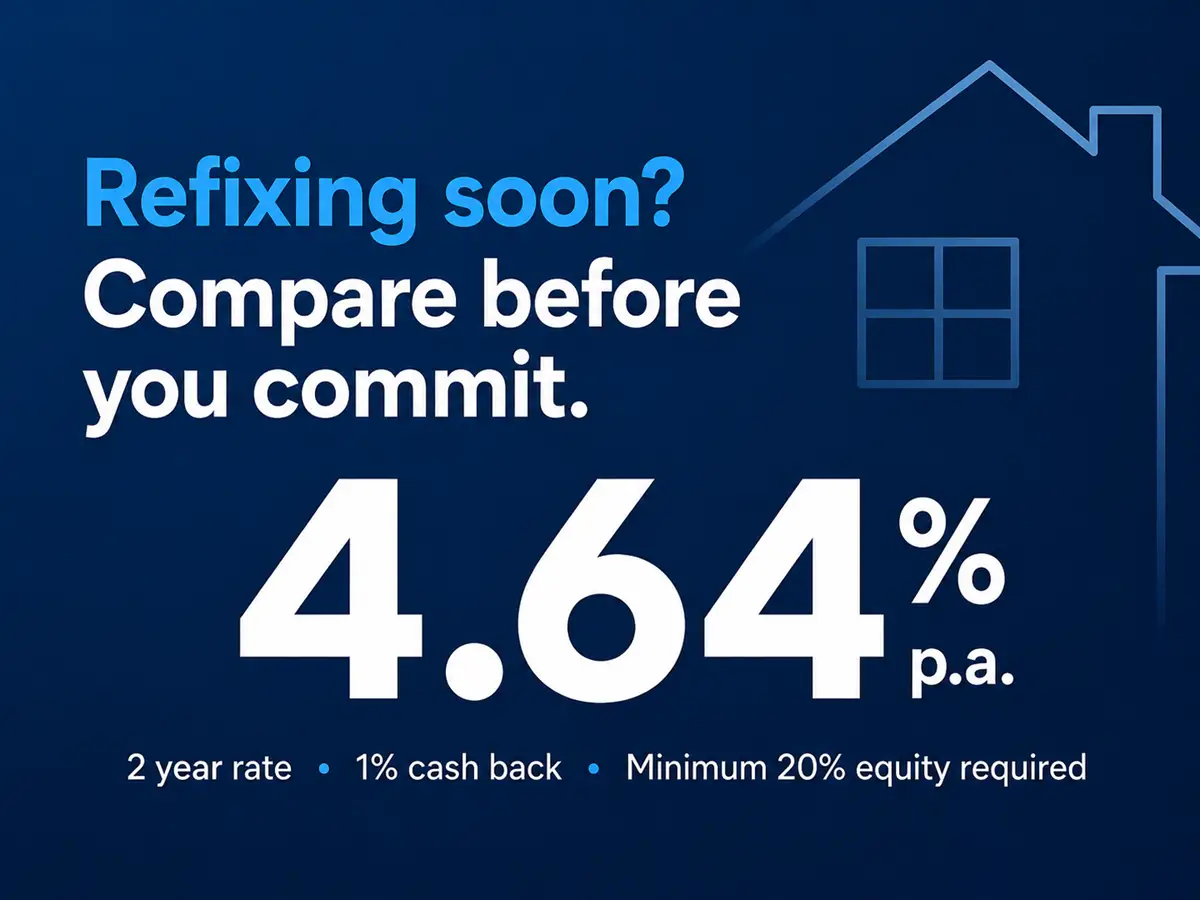
Before you refix with your current bank, compare your options.
Your fixed home loan is coming to an end and your bank has offered you a new rate.
The easiest option is to refix and stay where you are.
But before you lock in another fixed term, it can be worth asking:
Could another lender offer a better overall deal?
If your mortgage is currently with ANZ, ASB, BNZ, Westpac or another major bank, your options may extend beyond your current lender.
Depending on your income, equity, loan size and property, suitable refinance options may include smaller lenders and Chinese-owned banks registered in New Zealand.
A lower interest rate is only part of the comparison. Cashback, legal costs, cashback clawbacks, loan structure and flexibility can all affect whether refinancing is worthwhile.
My role is to compare the numbers and help you understand whether staying or switching makes more sense.
Fixed rate ending soon?
Send me your current bank’s refix offer and I can help you compare it with suitable refinance options.
The simple idea
Do not refinance just because another bank looks cheaper. Do not refix just because staying feels easier. Compare the full cost first, then decide.
Refix vs Refinance: What's the Difference?
Refixing and refinancing are different.
Refixing normally means choosing a new fixed or floating rate while keeping your mortgage with the same lender.
Refinancing means moving your home loan to another lender, usually to access a better overall lending option.
Your fixed-term expiry creates a natural time to compare.
Instead of breaking a fixed loan partway through its term, you are already making a new interest-rate decision. This gives you an opportunity to compare:
- your current bank’s refix offer
- refinance rates from suitable lenders
- available cashback
- switching costs
- loan structure and features
You do not have to refinance.
The important thing is knowing what alternatives are available before you refix.
The Big Four are familiar - but familiarity is not the same as comparison
ANZ, ASB, BNZ and Westpac are familiar to many New Zealand homeowners. Your salary, savings, cards and mortgage may already be with the same bank.
That convenience has value.
But it can also make it easy to automatically accept the next refix offer without checking what else is available.
This does not mean your current bank’s offer is poor.
It simply means you should compare before assuming it is the best option.
What happens when you look beyond the Big Four?
Here is where the comparison becomes interesting. Interest.co.nz’s mortgage-rate snapshot on 10 August 2026 showed the major banks at about 4.99% for one year and around 5.45% to 5.49% for two years for borrowers below 80% LVR. At the same time, several Chinese-owned banks were advertising lower selected fixed rates.
But a lower advertised rate does not mean every borrower will qualify. The more important questions are whether the bank lends on your type of property, whether your income meets its servicing requirements, how much equity you have, the minimum loan size, and whether the loan features suit the way you manage your mortgage.
For example, China Construction Bank’s published special-rate conditions generally require at least 20% equity, with the home loan serviced by New Zealand local income. Its actual rate can also depend on factors such as the amount borrowed, income, credit history and other financial commitments.
Bank of China has also published special-rate criteria requiring at least 20% equity and, in recent rate notices, a minimum lending amount of $500,000.
This is why comparing mortgage rates is not just about finding the lowest number. The real question is whether you qualify for the offer and whether the overall loan suits you.
What Could a Lower Refinance Rate Mean?
A difference of 0.25%, 0.35% or 0.50% may not look significant.
But on a large mortgage, it can add up.
For example, on a $650,000 mortgage, a 0.35 percentage-point difference is roughly $2,275 on the starting balance over one year before allowing for repayments and other costs.
The larger the mortgage, the more important the comparison can become.
But rate alone should not decide the answer.
You also need to consider:
Interest rate + cashback + switching costs + clawbacks + loan features + how long you expect to stay with the lender.
This is why I recommend comparing the full numbers before accepting a new fixed term.
Cashback Can Be Valuable, But Compare the Full Deal
Cash contributions can make refinancing attractive.
When mortgage switching increased sharply in late 2025, the Reserve Bank reported that some banks were offering new customers cash contributions of up to 1.5% of the mortgage balance, compared with more typical levels of around 0.9%.
But cashback is only one part of the deal.
The Financial Markets Authority says borrowers should be careful about short-term incentives and describes cashback as the “icing on the cake”, rather than the main reason for choosing a mortgage.
Cashback may also come with a clawback period. If you move your mortgage again within that period, you may have to repay some or all of the cashback.
It is not saying that a bank raises your future mortgage rate because it gave you cashback. Fixed rates change with the market, funding costs, lender pricing and your future refix. The better comparison is total value: rate + cashback + fees + clawbacks + loan features + likely time with the lender.
A slightly higher interest rate is less obvious because you pay it gradually over time.
Both matter. Both should be measured before you decide.
I can help you compare the numbers side by side, so you can see whether the cashback actually improves the overall deal.
Your current bank isn't your only option
Many homeowners automatically refix with ANZ, ASB, BNZ, Westpac or their existing lender.
There is nothing wrong with staying with your current bank.
But it is worth knowing what your alternatives are before committing to another fixed term.
Depending on your financial situation, I may be able to compare options from:
- major New Zealand banks
- smaller lenders
- NZ-registered Chinese-owned banks such as Bank of China, China Construction Bank and ICBC
Some of these lenders may offer competitive rates for borrowers who meet their lending criteria.
Eligibility can depend on things such as:
- your income
- your mortgage balance
- your property
- your equity or LVR
- your other financial commitments
- the type of loan you need
A good advertised rate is only useful if you qualify for it and the loan suits you.
That is why I compare the lender as well as the rate.
Are Chinese-owned banks really an option?
Yes.
Bank of China (New Zealand), China Construction Bank (New Zealand) and ICBC (New Zealand) operate within New Zealand’s banking system. Their ownership is Chinese, but their New Zealand banking entities are registered and regulated in New Zealand.
You do not need to be Chinese to consider them.
What matters more is whether you meet the bank’s lending criteria, including:
- the type of property you own
- your income and ability to service the loan
- how much equity you have
- your mortgage size
- your other debts and financial commitments
- whether the bank’s loan features suit you
For example, China Construction Bank’s published special-rate conditions generally require at least 20% equity, and the home loan to be serviced by New Zealand local income. The rate you actually receive can also depend on factors such as your loan amount, income, credit history and other financial commitments.
Bank of China also requires at least 20% equity for its published special home-loan rates and currently states a minimum lending amount of $500,000.
So while these banks can sometimes offer competitive rates, the lowest advertised rate is not automatically the best or available option for everyone.
I can help you check which lenders you may qualify for and compare the overall deal before you decide.
Who Should Consider Refinancing Their Home Loan?
Not every homeowner will benefit from refinancing.
It may be worth taking a closer look if your fixed term is ending soon, you have good equity in your property, your income is stable, and your mortgage balance is large enough that even a small rate difference could make a meaningful difference.
Before you decide whether to refix or refinance, here are a few things worth checking.
When does your current fixed term end?
The best time to compare your options is often before your existing fixed term expires.
This gives you time to review your current bank’s refix offer and compare it with other lenders without rushing into a decision.
What is your current bank offering you to refix?
Your current bank’s actual offer is an important starting point.
Do not compare another lender’s rate only with the advertised rate on your bank’s website. Your bank may be willing to offer you a better retention rate, so it is worth finding out what they can actually offer you first.
How much is left on your mortgage?
The size of your mortgage matters.
A small difference in interest rate may not seem significant, but on a larger mortgage balance it can add up to meaningful savings over one or two years.
This is why refinancing can be more worthwhile for borrowers with a larger home loan.
What is your property worth today?
Your current property value helps determine how much equity you have and your loan-to-value ratio, or LVR.
If your property has increased in value since you bought it, your financial position may be stronger than when you first took out the mortgage.
Do you have around 20% equity or more?
Many competitive home loan rates are available to borrowers with an LVR of 80% or lower, which generally means having around 20% equity in the property.
Having stronger equity may give you more options when comparing lenders.
However, every lender has its own criteria, so having 20% equity does not automatically mean you will qualify for every offer.
Did you receive cashback from your current bank?
If your current bank gave you cashback when you took out or refinanced your mortgage, check whether a repayment or clawback period still applies.
Leaving the bank too early could mean having to repay some or all of that cashback.
This cost should be included when comparing whether refinancing is worthwhile.
What will you need from your mortgage over the next two or three years?
The lowest interest rate is not always the best option.
Think about how you may want to use your mortgage in the next few years.
For example, you may want:
- an offset account
- revolving credit
- the ability to make extra repayments
- a future top-up
- more flexibility with your loan structure
These features can sometimes be just as important as the interest rate.
Has your income or household situation changed?
A new lender will assess your financial position based on your situation today.
If your income, expenses, employment, family situation or other debts have changed since you first took out the mortgage, this could affect your refinance options.
This does not necessarily mean you cannot refinance. It simply means your current position needs to be assessed before deciding which lenders may be suitable.
Compare before you refix
Refinancing does not always mean you should change banks.
Sometimes your current lender may still offer the better overall option.
The important thing is to compare your current refix offer, possible refinance options, switching costs and loan features before making a decision.
Before you refix, compare.
Mortgage Coming Up for Refix?
Before you accept another fixed term with your current bank, find out what else may be available.
If you have good equity, stable income and a meaningful mortgage balance, I can compare your current bank’s offer with suitable refinance options from other lenders.
Start with three things:
- Your current mortgage balance
- Your fixed-rate expiry date
- Your bank’s current refix offer
I can then help you understand whether staying or switching may make better financial sense.
Frequently asked questions
What is the difference between refixing and refinancing a mortgage in NZ?
Refixing means choosing a new interest-rate term, usually with your existing lender. Refinancing means moving the mortgage to another lender. A refix date is often a good time to compare refinancing because the existing fixed term is ending.
Can a New Zealand homeowner refinance to a Chinese-owned bank?
Potentially, yes. Chinese-owned banks such as Bank of China (New Zealand), China Construction Bank (New Zealand) and ICBC (New Zealand) operate in the NZ banking market. Eligibility depends on the lender’s credit criteria, property, income, equity and loan size.
Do I need 20% equity to get the sharper mortgage rates?
Many advertised special rates are aimed at borrowers with at least 20% equity, although lender rules vary. China Construction Bank, for example, publishes a minimum 20% equity condition for its special home-loan rates.
What happens to my cashback if I refinance to another bank?
Your current cashback agreement may contain a clawback period. If you leave early, you may need to repay some of the cash contribution. This should be included in the refinance calculation before you switch.
How early should I compare mortgage options before my fixed term ends?
Starting roughly 60-120 days before expiry can give you time to collect documents, compare lenders and understand your current bank’s offer without rushing. The best timing depends on your lender and circumstances.
How much does it cost to refinance a mortgage in NZ?
Generally, there is no charge for my mortgage advice, as I receive a commission from the lender when your loan is settled. However, refinancing may involve other costs, such as legal fees, break fees or cashback clawbacks. I’ll help you understand these costs before you decide whether refinancing is worthwhile.

Hi, I'm Lydia.
Licensed Mortgage Adviser
I help New Zealand homeowners understand their mortgage options in simple language. If your fixed rate is coming to an end, I can help you compare your current bank’s offer with suitable alternatives before you make your next decision.
Financial Advice Provider:
Apple Mortgage Limited
FSPR / Registration details
Lydia Chen is a Financial Adviser and is registered on the Financial Service Providers Register (FSPR). You can check my registration at FSP-Register NZ.
Contact details
Lydia Chen
Licensed Mortgage Adviser
Phone: 02102467321
Email: Lydia@applemortgage.co.nz
Disclosure Statement
Important information about the advice services I provide, including who I act for and any potential conflicts of interest.
How Lydia may be paid
I may be paid by way of commission by lenders and/or a fee from you. The way I am paid will not influence the advice I provide.
What the review covers
Know your options before you refix.
- Your current bank's offer
- Break fees and cashback conditions
- Other suitable lender options
- Repayment and loan-term comparison